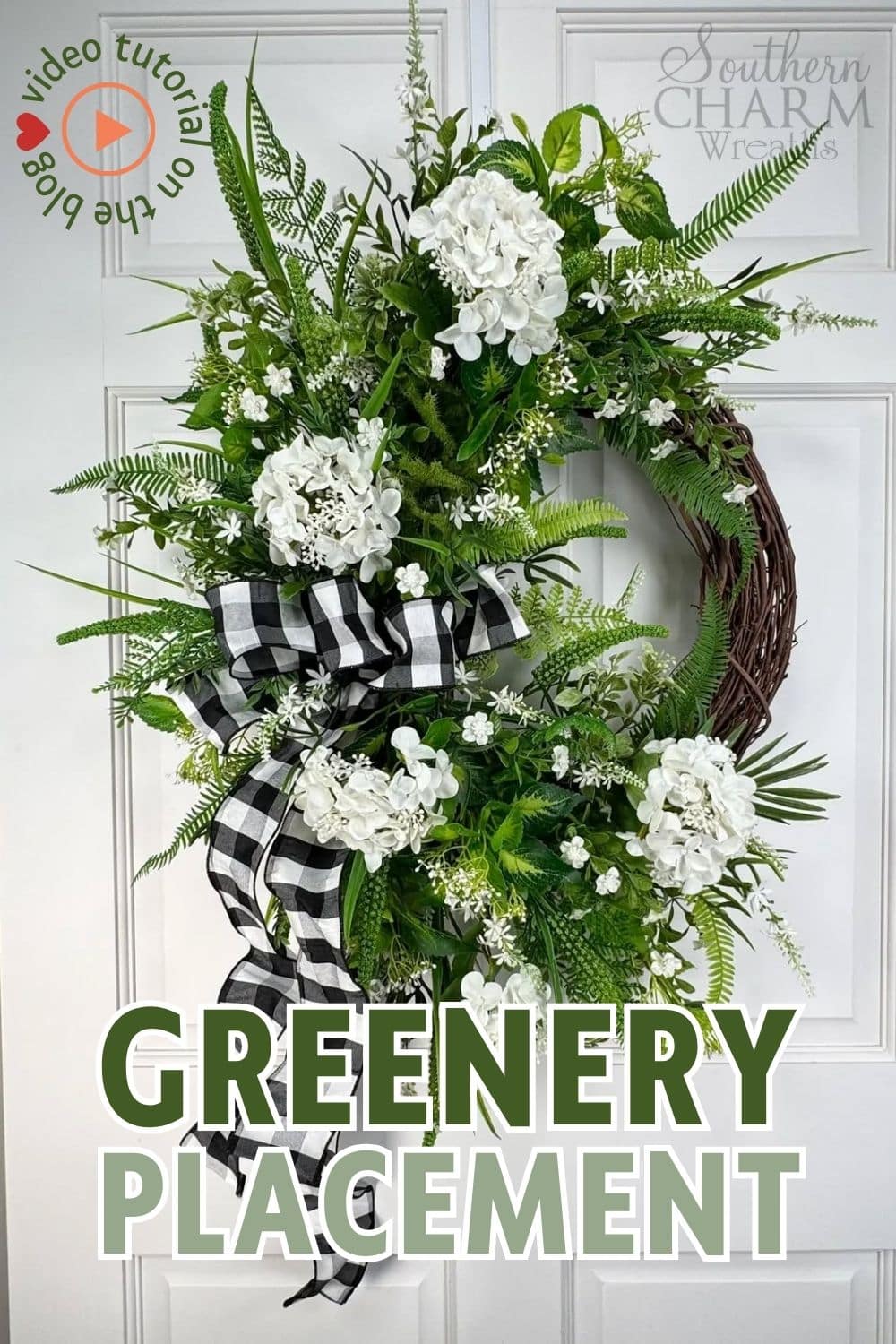
How to Place Greenery in a Grapevine Wreath
Y’all, if your wreaths are coming out flat or sparse no matter how many stems you add, I promise you it is almost never a flower problem. It is almost always a greenery placement problem. And once you know the three-layer method, you cannot unsee it.
Every wreath you make from this point forward will look fuller, more realistic, and more professionally designed. Watch the quick tip below and then keep reading!
Greenery in a Wreath So It Actually Looks Full
QUICK ANSWER: Place greenery in a wreath in three layers: a base layer of full-coverage stems to hide your mechanics, a mid layer of a different greenery texture to add depth, and a wispy accent layer that extends past the wreath edge for a lush, organic look. Always greenery first, flowers second.
The #1 Greenery Mistake
Using only one type of greenery. One variety, no matter how much of it you use, always looks flat because there is no visual contrast between the stems. The moment you add a second greenery type with a different leaf shape or texture, the whole wreath comes to life.
The Three-Layer Greenery Method
Base Layer: Full Coverage
Start with a broad, full-coverage greenery variety and tuck stems all the way around the wreath base. This layer covers your foam or grapevine mechanics so nothing shows through. Angle stems to follow the natural curve of the wreath rather than pointing straight forward.
Good choices: boxwood, bay leaf, magnolia leaf, broad flat stems
Mid Layer: Texture and Depth
Add a second greenery type with a noticeably different leaf shape or texture. Tuck these stems in at varied angles; some facing forward, some sideways, some angling slightly upward. This layer is what creates depth. If your wreath looks one-dimensional, this is the layer it is missing.
Good choices: fern, eucalyptus, smilax, sage, lamb’s ear
Accent Layer: Wispy and Trailing
Finish with a wispy or trailing variety and let it extend two to four inches past the outer edge of the wreath base. This is the layer that gives your wreath that soft, natural silhouette. It is also the layer most beginners skip and the one that makes the biggest visible difference.
Good choices: smilax vine, wispy fern fronds, string of pearls, trailing ivy, grass stems
A Few More Things Worth Knowing
Greenery always goes in before flowers. Full stop. The greenery layer is the foundation that your florals sit on top of. Add flowers first and you end up with uneven gaps, stems with nothing to anchor into, and florals that look placed rather than grown.
Odd numbers feel more natural. When you are adding individual greenery stems, place them in groups of three or five rather than two or four. Even numbers feel symmetrical and stiff. Odd numbers feel organic and relaxed, which is exactly the look you are going for.
Vary the stem length before inserting. Cut stems to two or three different lengths before you start. Shorter stems sit close to the wreath base, longer stems extend outward. That variation in depth is part of what creates the three-dimensional look.
The outer edge matters as much as the front. Tuck greenery into the inner opening of the wreath AND the outer edge, not just the front face. When a wreath hangs on the door, the edges are visible. A wreath that is only finished from the front looks unfinished in person.
Quick Answers
How do you place greenery in a wreath?
Use the three-layer method: base layer for full coverage, mid layer for texture and depth, accent layer of wispy stems that extend past the wreath edge. Always use at least two different greenery types. Using only one type is the most common reason wreaths look flat.
Why does my wreath look flat?
Almost always a greenery problem. Either only one type of greenery was used, stems were all inserted at the same angle, or no trailing stems were added at the outer edges. Add a second greenery texture at varied angles and tuck in wispy stems that extend past the base edge. That combination fixes flat wreaths nearly every time.
How many types of greenery should I use in a wreath?
At least two, and ideally three. One full-coverage base variety, one textured mid variety, and one wispy trailing accent variety. Each type should have a noticeably different leaf shape or texture so the variety reads clearly in the finished wreath.
Should greenery extend past the edge of the wreath base?
Yes. Greenery that stays within the wreath base boundaries makes the design look contained and stiff. Letting wispy or trailing stems extend two to four inches past the outer edge gives the wreath a soft, natural silhouette, one of the key details that separates a beginner wreath from a professional one.
Do you add greenery before or after flowers in a wreath?
Always greenery first. The greenery layer is the foundation everything else sits on top of. Add flowers first and you end up with uneven gaps and florals that have no natural framework to nestle into.